Latest Update:
Homeflow Launches AI-Powered Live Chat for Agents
SEO for estate agents can be complicated. The same principles apply whether you're a sales-focused estate agency or a letting agent, as the tactics below work for both. There are meta descriptions, long-tail keywords and that's before you start looking at technical SEO such as page speeds and load times. These top 8 strategies can help you rank higher on Google and other major search engines, leading to more conversions and instructions for your agency. As we'll cover towards the end of this guide, the same fundamentals also shape how AI tools like ChatGPT and Google's AI Overviews decide which agents to recommend.

SEO is the process of optimising a website to rank higher in search engine results for relevant keywords and phrases. By implementing SEO best practices, estate agents can improve their website's visibility, attract more qualified leads, and ultimately grow their business.
With the majority of homebuyers starting their property search online, appearing at the top of search engine results can significantly increase the likelihood of attracting potential clients. SEO helps estate agent websites rank higher on Google and other search engines, making it easier for buyers and sellers to discover your listings and services.
Identify relevant keywords and phrases that potential clients are likely to use when searching for properties online. Focus on long-tail keywords that are specific to your niche and location, such as "luxury homes for sale in London" or "flats for rent in York".
- Google Keyword Planner
- SEM rush
- Ahrefs
Optimise your website's on-page elements, including meta titles, meta descriptions, headings, and image alt tags, to include your target keywords. Ensure that your content is well-structured, informative, and relevant to your target audience as well.
- Include target keywords in meta titles and descriptions
- Use descriptive headings (H1, H2, H3) to organise content
- Optimise image alt tags with the relevant keywords
- Improve page loading speed for better user experience.
Create compelling and informative content that addresses the needs and interests of your target audience. Publish blog posts, articles, and property listings that provide valuable insights, tips, and resources related to buying, selling, and investing in property.
- Write detailed property descriptions with relevant keywords
- Share market insights, neighbourhood guides, and industry news
- Use visual content such as videos, infographics, and virtual tours to engage users
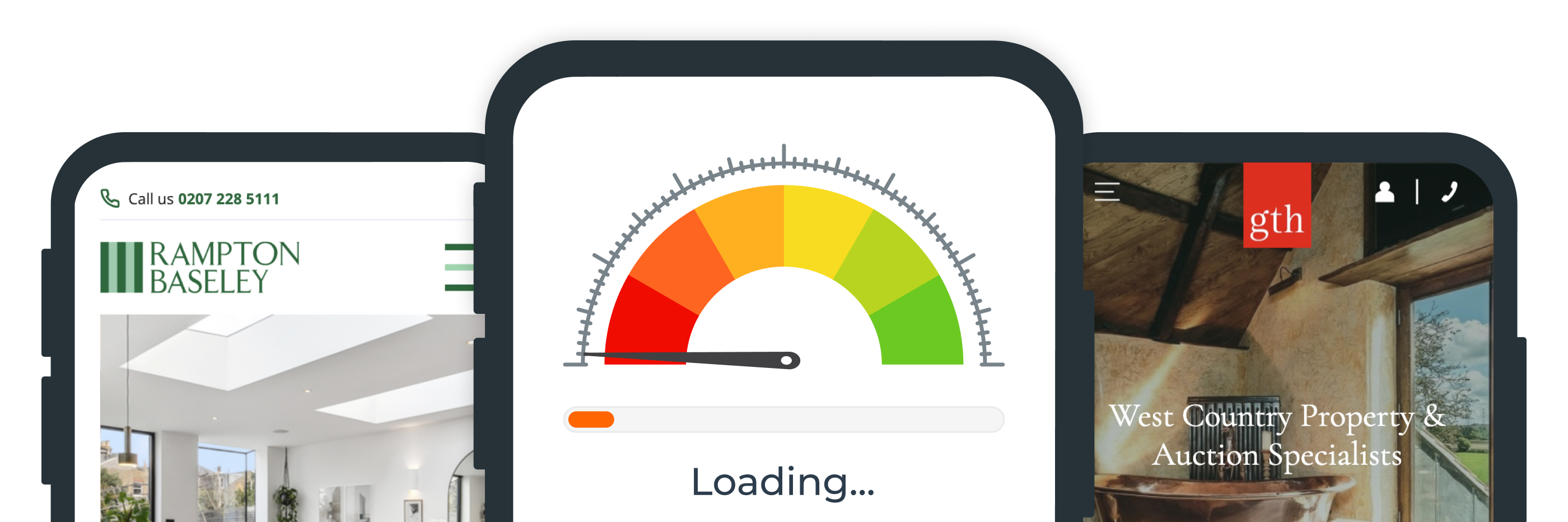
Ensure that your website is mobile-responsive and provides a seamless user experience across all devices. With an increasing number of users accessing the internet via smartphones and tablets, mobile optimisation is essential for improving rankings and retaining visitors. Your user experience is as important as the visuals of your design, read about some common UX mistakes we see and how to fix them.
- Use a responsive website design that adapts to different screen sizes
- Optimise page loading speed for mobile devices
- Implement touch-friendly navigation and buttons
Optimise your website for local search by including location-specific keywords and creating Google My Business listings. Local SEO techniques help estate agents appear in local search results and attract buyers and sellers in their target branch locations.
- Include city, neighbourhood, and street names in your content. Homeflow's SEO services for estate agents build local keyword strategies like these into every campaign, tailored to your specific patch.
- Claim and optimise your Google My Business listing with accurate business information
- Encourage satisfied clients to leave positive reviews and ratings
Build high-quality backlinks from reputable websites in the property industry and related niches. Backlinks are a crucial ranking factor for search engines and can significantly impact your website's authority and credibility.
- Guest blogging on industry websites and blogs
- Participating in local business directories and listings
- Earning mentions and features from local news outlets and publications
Engage with your audience on social media platforms such as Facebook, Instagram, and Twitter (X) to increase brand awareness, drive traffic to your website, and build relationships with potential clients. Social signals are a contributing factor to search engine rankings and can help improve your website's visibility.
- Share property listings, blog posts, and market updates
- Engage with followers through comments, messages, and live chats
- Use hashtags to increase visibility and reach a wider audience

Monitor your website's performance regularly using tools such as Google Analytics and Google Search Console. Track key metrics such as organic traffic, keyword rankings, click-through rates, and conversion rates to assess the effectiveness of your SEO efforts and identify areas for improvement.
SEO is an ongoing process that requires continuous monitoring and optimisation. Stay updated on industry trends, algorithm changes, and best practices to ensure that your estate website remains competitive and visible in search engine results.
More home movers are now starting their search in tools like ChatGPT, Google's AI Overviews or Perplexity, rather than working through a page of blue links. These tools don't just list agents, they actively recommend specific ones, and inconsistent or thin information about your agency is often enough to be left out altogether.
The eight strategies above are still the foundation, because AI tools draw on many of the same signals: clear, well-structured content, genuine local expertise, and a consistent picture of your services across the web. Good technical SEO and quality content help you show up in both places at once, rather than being separate jobs.
What's different is the emphasis. Generative Engine Optimisation, or GEO, puts more weight on things like clear service coverage for each branch and area you cover, consistent business details wherever your agency is mentioned online, and genuinely useful FAQ content that answers the specific questions buyers and sellers ask. We go into this in more depth in our guide to Generative Engine Optimisation for estate agents.
Implementing effective SEO strategies are essential for estate agents looking to improve their online visibility, attract more qualified leads, and grow their business. By understanding the fundamentals of SEO and implementing best practices such as keyword research, on-page optimisation, content creation, and local SEO, you can enhance your website's rankings and drive organic traffic to your property listings and services. Stay proactive, monitor your website's performance regularly, and adapt your SEO strategy to evolving trends and algorithms to stay ahead of the competition in the competitive property market, whether that competition is playing out on a Google results page or inside an AI assistant's answer. If you'd like expert help putting these strategies into practice, take a look at Homeflow's SEO service.

Yes, SEO can be highly effective for estate agents. By optimising their website with relevant keywords, creating valuable content, and building backlinks, agents can improve their online visibility, attract more targeted traffic, and ultimately generate leads and sales. However, success in SEO requires consistent effort and a strategic approach tailored to the property market.
SEO stands for "Search Engine Optimisation." It refers to the process of optimising an estate agent's online presence, such as their website and content, to improve visibility in search engine results and attract more potential clients.
SEO for estate agents means optimising your website so it ranks higher on Google when people search for agents, valuations, or properties in your area. It covers technical foundations such as site speed and structure, alongside the content on your listings and blog pages. Done well, it turns organic search into a steady source of valuation requests and enquiries, without paying for every click.
Costs vary depending on how much work your current site needs. A modest ongoing programme can run to a few hundred pounds a month, while a full technical overhaul and content strategy for a multi-branch agency will cost much more. The best starting point is usually a site audit, so you're paying to fix what's actually holding you back rather than guessing.
Most agencies start seeing meaningful movement within three to six months, though some technical fixes show smaller improvements sooner. SEO builds over time rather than delivering overnight results, which is why the agencies that do best treat it as an ongoing part of their marketing rather than a one-off project.
Yes. Ranking well on Google is still the foundation, and most of the same signals, quality content, technical performance, consistent local information, feed AI recommendations too. There are some extra considerations specific to AI search, which we cover in our guide to Generative Engine Optimisation.

.jpg)