Latest Update:
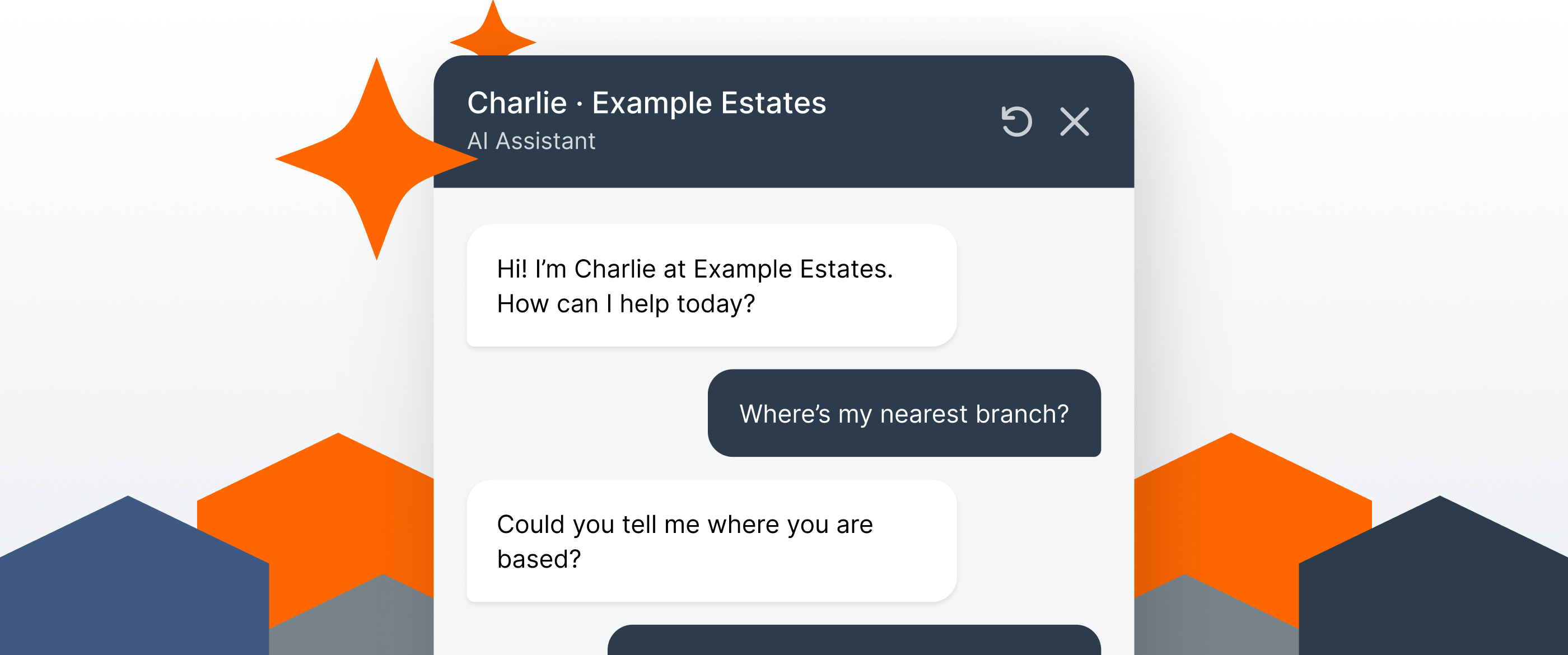
Homeflow Launches AI-Powered Live Chat for Agents
The first two posts in this series looked at how people find your agency through AI, and how to make your pages easy for AI systems to recommend. This one covers a related but different shift: some of your visitors aren't people at all, they're AI agents browsing on a person's behalf.
Tools like Perplexity Comet and Claude for Chrome now sit inside a browser and act for the person using it, summarising pages, comparing options across sites, filling in forms. Adoption has moved quickly. Claude for Chrome alone grew from around 40,000 installs to over 10 million in the space of six months. This category is still young and changing fast, ChatGPT Atlas, for instance, is already being retired as a standalone browser and folded into the main ChatGPT app, but the direction is clear. A growing share of your traffic will be an agent, not a person, at least for part of the visit.
An agent visiting your website isn't looking at it the way a person does. It isn't drawn in by a striking hero image or a well-chosen typeface. It reads your structure, your headings, your forms and your text, and it's trying to extract something specific: what you offer, where you operate, how to book a valuation, how to get in touch. If that information is buried in a slider, hidden behind a hover state, or scattered across a page without clear structure, a person might still find it. An agent is far more likely to give up or get it wrong.
You may have come across llms.txt, a proposed plain-text file that gives AI agents a quick summary of a site. It's worth understanding, but worth keeping in proportion. Most of the AI crawlers that drive citations in AI search results largely ignore it. Its real value sits elsewhere, as a way for agents that are actively browsing and acting on a visitor's behalf to route to the right page quickly, more a courtesy for agents passing through than a ranking lever. Useful if you have the capacity for it, but not a substitute for the fundamentals covered in the last post.
The practical advice here overlaps with good web practice generally. Clear, semantic headings. Forms with properly labelled fields rather than placeholder text alone. Buttons and links with descriptive text, "book a valuation" rather than "click here." A live chat or contact option that's easy to locate and doesn't rely on a person hunting for it. None of this is exotic. It's the same discipline that makes a site easier for a person in a hurry, applied with an agent in mind as well.
Some of what these agents do goes beyond reading. Comet and similar tools can already fill in a form and submit it on a person's behalf, booking a viewing or requesting a valuation without the person doing much more than asking for it. For agency sites, that puts a premium on the same things that make a form work well for a person in a hurry: a small number of clearly labelled fields, no unnecessary friction, and a confirmation that makes it obvious the request has gone through. A form built to be as awkward as possible for bots risks tripping up a growing category of legitimate visitor along with them.
It's also worth knowing that this category is still maturing, and not always smoothly. Independent research earlier this year found that several agentic browsers had security weaknesses that could let a malicious page interfere with what the browser did elsewhere, and some monitoring has flagged unusual, bot-like patterns appearing on payment and checkout forms. None of that is a reason to treat every visiting agent with suspicion, most are simply doing what a person asked. But it's a reasonable prompt to keep ordinary good practice in place: sensible form validation and rate limiting on repeated submissions, applied consistently rather than as an afterthought.
None of this changes the fundamentals your website has always needed: clarity, structure and an honest account of what you offer. What's changed is who, or what, is reading it, and increasingly, acting on it. A site built with that second audience in mind will serve both well.